
%20(4)-v1.png)
Travel with Insight, Explore with Passion

Travel with Insight, Explore with Passion

Never stop learning.

Questions? Call 1-855-476-5080

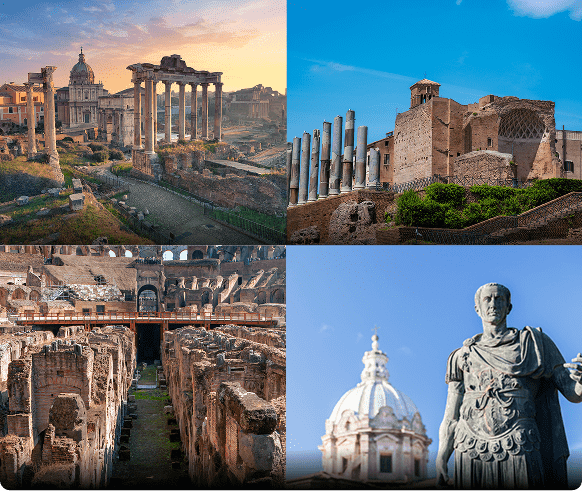
The Colosseum
The Hypogeum
The Forum
Domus Aurea
Caesar Statue
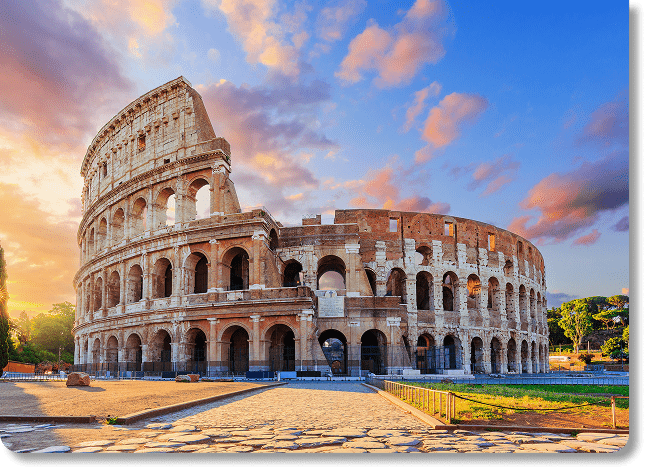
Starting at $7,995 per person
Experience the Eternal City as it was shaped, ruled, and imagined at the height of imperial power, when emperors and institutions defined the rhythms of Roman life. Guided by a distinguished classical scholar specializing in Roman religion, law, and historiography, this immersive journey explores Rome not simply as a collection of monuments, but as a living imperial capital—one where emperors, senators, priests, and ordinary citizens moved through spaces charged with ritual, authority, and memory.
Through on-site lectures and interpretive walks, participants learn to “read” temples, forums, imperial residences, and early Christian spaces as active instruments of governance and belief during the age of the Caesars. Drawing on ancient texts and material culture, your expert guide reveals how myth underpinned imperial legitimacy, how ritual structured daily life, and how architecture projected the emperor’s presence across the city. The result is a richly layered experience that illuminates not only how Rome ruled an empire, but how imperial ideas of power, citizenship, and sacred authority continue to shape Western thought.

Rome in the Time of the Caesars
with Hans-Friedrich Mueller
DEPARTURE DATES AND PRICING
Highlights
Explore the Colosseum and Baths of Caracalla to understand how entertainment and leisure reinforced hierarchy, generosity, and Roman values.
Examine catacombs and early basilicas to trace religious transition and coexistence within the imperial city.
Discover how temples, basilicas, and public spaces functioned as instruments of religion and statecraft, shaping civic identity through ritual, law, and memory.
Uncover how emperors used architecture, mythology, and spatial design to express divine authority.

Explore the Colosseum and Baths of Caracalla to understand how entertainment and leisure reinforced hierarchy, generosity, and Roman values.
Examine catacombs and early basilicas to trace religious transition and coexistence within the imperial city.
Discover how temples, basilicas, and public spaces functioned as instruments of religion and statecraft, shaping civic identity through ritual, law, and memory.
Uncover how emperors used architecture, mythology, and spatial design to express divine authority.
Highlights
Hans-Friedrich Mueller
Dr. Hans-Friedrich Mueller is the Chair of Classics and the Thomas B. Lamont Professor of Ancient and Modern Literature at Union College. Known for his broad expertise and enthusiastic teaching style, Professor Mueller has decades of experience teaching and leading tours. Professor Mueller won the American Philological Association’s Award for Excellence in the Teaching of Classics at the College Level, as well as two awards for excellence in teaching at The Florida State University. At the University of Florida, he developed a graduate distance-learning program in classics for high school teachers. He earned his PhD in Classical Philology from The University of North Carolina at Chapel Hill. In addition to writing numerous articles, Professor Mueller is the author of Roman Religion in Valerius Maximus, the editor of an abridged edition of Gibbon’s Decline and Fall of the Roman Empire, and the translator of Andreas Mehl’s Roman Historiography: An Introduction to Its Basic Aspects and Development. He has created three Great Courses: Latin 101: Learning a Classical Language, Greek 101: Learning an Ancient Language, and The Pagan World: Ancient Religions Before Christianity.
Journey Expert
Hans-Friedrich Mueller



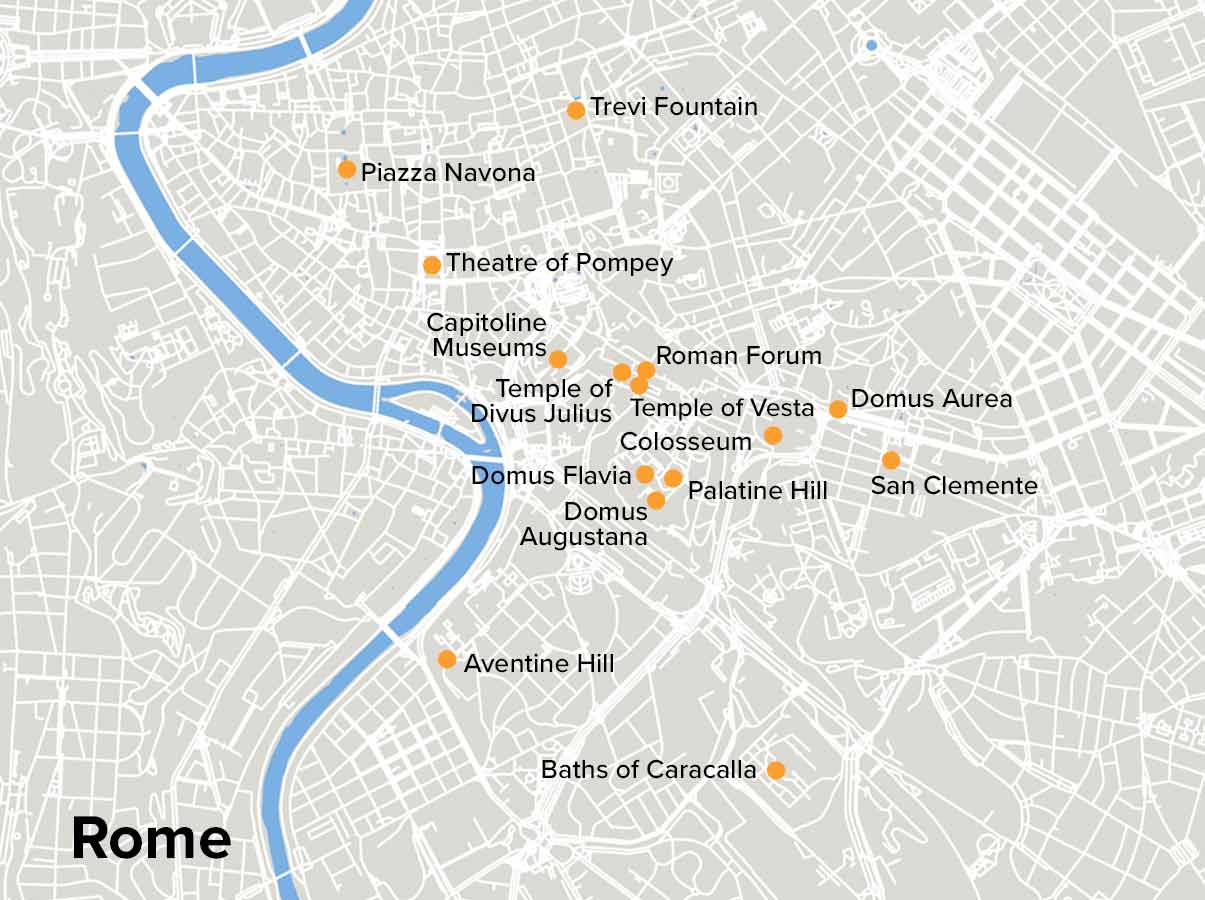
Trevi Fountain
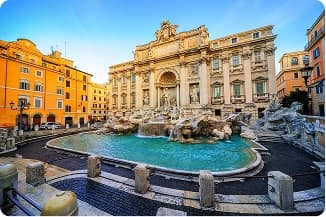
Arrive in Rome and settle into your hotel before an afternoon orientation walk through the historic center. Stroll from the Spanish Steps to the Trevi Fountain and Piazza Navona, where ancient foundations support Renaissance and Baroque masterpieces. Along the way, your expert introduces Rome as a layered city—where pagan temples become churches and imperial roads anchor modern streets. A welcome dinner with your expert and fellow travelers near the ancient Theatre of Pompey sets the stage for the week ahead, offering an informal introduction to Rome’s deep intertwining of daily life, politics, and ritual.
Included Meal: Dinner
Accommodations: Hotel Viminale

Domus Aurea
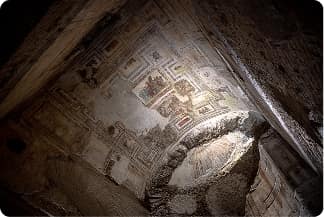
Begin with a focused morning lecture from your expert, which examines the journey from religious ritual to politics and law. This foundation prepares you to interpret the Roman Forum as the sacred and political heart of the Republic and Empire. On site, basilicas reveal legal and religious authority, triumphal arches narrate conquest and legitimacy, and the Temple of Vesta exemplifies Rome’s dependence on ritual continuity. The Temple of Divus Julius introduces the elevation of political figures to divine status. In the afternoon, a visit to the Domus Aurea highlights how imperial architecture and mythological imagery transformed a personal residence into a stage for divine kingship.
Included Meals: Breakfast, Lunch
Accommodations: Hotel Viminale

Palatine Hill
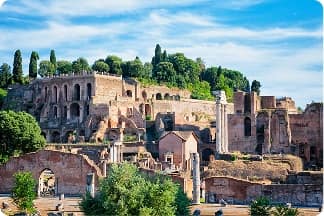
The Palatine Hill offers a commanding view—both literal and symbolic—of imperial power. Led by your expert, stroll through the remains of the Domus Augustana and Domus Flavia to see how emperors curated visibility, access, and authority. Domestic spaces, including those associated with imperial women, reveal the intimate side of rulership. In the afternoon, the Capitoline Museums deepen the story through sculpture, inscriptions, and cult objects that illuminate Rome’s gods, heroes, and rulers. Together, these sites demonstrate how religion, art, and governance were inseparable in Roman life.
Included Meals: Breakfast, Dinner
Accommodations: Hotel Viminale
Baths of Caracalla
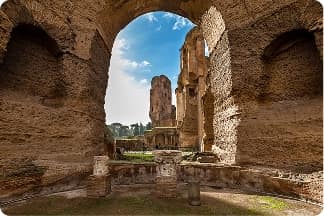
Today focuses on public entertainment and communal life. Your expert will discuss public religion as political policy and why The Games mattered. A morning visit to the Colosseum—including the hypogeum—reveals how games combined ritual, punishment, and imperial generosity into mass spectacle. Far from mere entertainment, these events reinforced social order and political loyalty. After lunch, explore the Baths of Caracalla, one of the empire’s greatest public complexes. Here, architecture, art, and daily routines show how Romans understood leisure, hygiene, and civic belonging as essential elements of a well ordered society.
Included Meals: Breakfast, Lunch
Accommodations: Hotel Viminale
Via Appia Antica
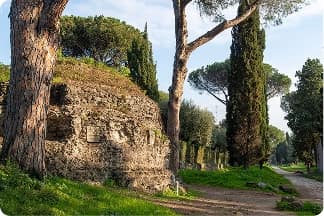
Travel along the Via Appia Antica, Rome’s famous ancient road, to experience infrastructure as an expression of imperial ambition. Nearby catacombs introduce early Christian burial practices and shifting beliefs about death and salvation. In the afternoon, visit Hadrian’s Villa at Tivoli, where architecture draws inspiration from across the empire. This retreat reflects a ruler’s intellectual curiosity and the cosmopolitan reach of Roman culture, blending philosophy, power, and artistic innovation into a landscape of ideas.
Included Meals: Breakfast, Dinner
Accommodations: Hotel Viminale
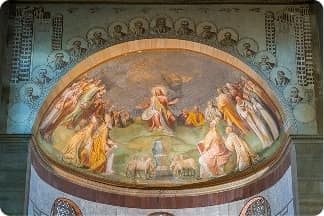
Aventine Hill at Santa Sabina
Begin on the Aventine Hill at Santa Sabina, an early Christian Basilica that incorporates classical columns and spatial traditions, signaling continuity amid cultural change. The symbolic keyhole view toward St. Peter’s underscores Rome’s enduring sacred geography. Later, descend beneath San Clemente (or San Prisca) to explore a Mithraic sanctuary. These intimate spaces reveal how private cults coexisted with official religion, offering insight into the complex religious marketplace of imperial Rome. Conclude with a festive farewell dinner sharing reflections with your expert and new friends.
Included Meals: Breakfast, Dinner
Accommodations: Hotel Viminale
Hotel Viminale Rome
Rome, Italy
Hotel Viminale is a stylish, modern boutique hotel housed in an historic late 19th century building in central Rome. Its minimalist interiors and cozy rooms blend elegance with contemporary comfort, offering a serene retreat just steps from iconic landmarks. With refined design details and a prime Via Cesare Balbo location, it provides an ideal base for exploring the Eternal City. (6 nights)
Sign up to receive the latest trip updates and instant access to a digital version of our beautiful full-color 2026–2027 travel catalog. You will also have the option to share your mailing address and we’ll send a printed copy of our next catalog to your door.
Stay Updated and Receive a FREE Catalog
Enter your name and email and we will keep you up to date on trips that are coming soon. PLUS, you will be able to download a digital version of our beautiful full color 2025-2026 travel catalog.
Get updates on NEW destinations and a FREE catalog right to your inbox.

Copyright 2026 The Teaching Company Sales, LLC. | Destinations | Terms & Conditions | Privacy Policy

Sign up to receive the latest trip updates and instant access to a digital version of our full-color 2026–2028 travel catalog. You will also have the option to share your mailing address and we’ll send a printed copy of our next catalog to your door.
Stay Updated and Receive a FREE Catalog
Request your copy of our full color travel catalog
Highlights
Uncover the dynastic ambitions and historical significance of monuments like Hassan Tower and the Mausoleum of Mohammed V in Rabat.
Experience the stony landscape of the Agafay Desert on a camel trek, culminating in a breathtaking sunset over the High Atlas Mountains.
Admire the Islamic architecture in Marrakesh, from the grand Koutoubia Mosque and intricate Bahia Palace to the serene beauty of the Ben Youssef Madrasa.
Discover the University of al-Qarawiyyin, the world’s oldest continuously operating university, and engage in a discussion on its profound influence on global scholarship.
Wander through the labyrinthine alleyways of the UNESCO-listed Medina in Fes, where vibrant stalls overflow with textiles, spices, and artisanal crafts.