%20(4)-v1.png)
Travel with Insight, Explore with Passion


Travel with Insight, Explore with Passion

Never stop learning.

Questions? Call 1-855-476-5080



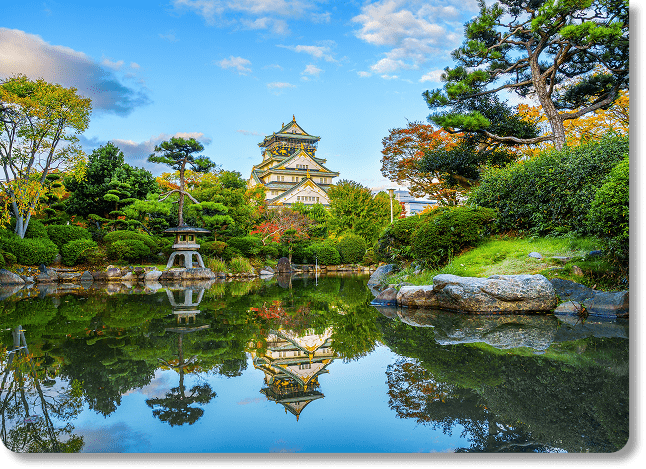
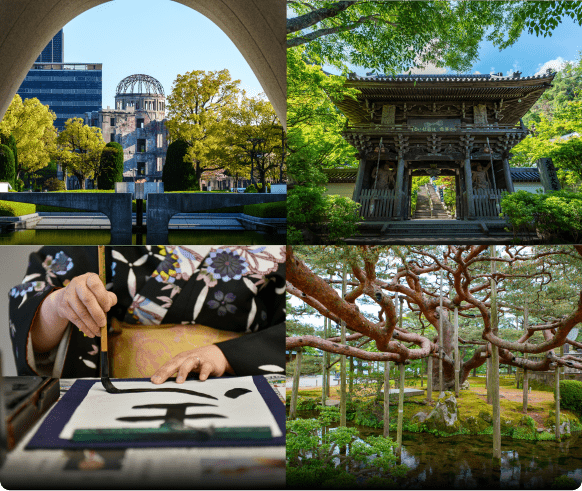
Osaka Castle
Japanese calligraphy
Peace Memorial. Hiroshima
Daishoin Temple
Koraku-en Garden
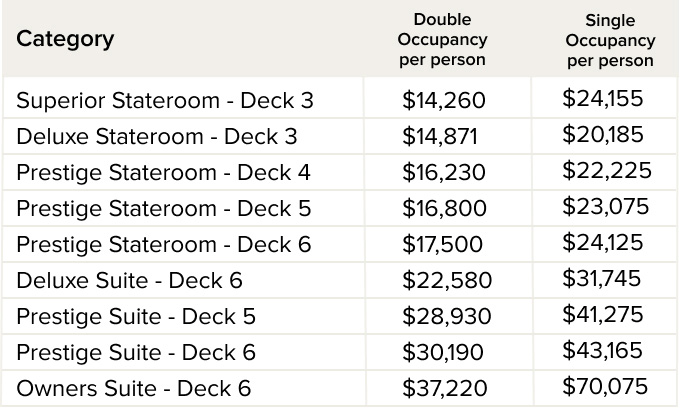
Starting at $14,260 per person
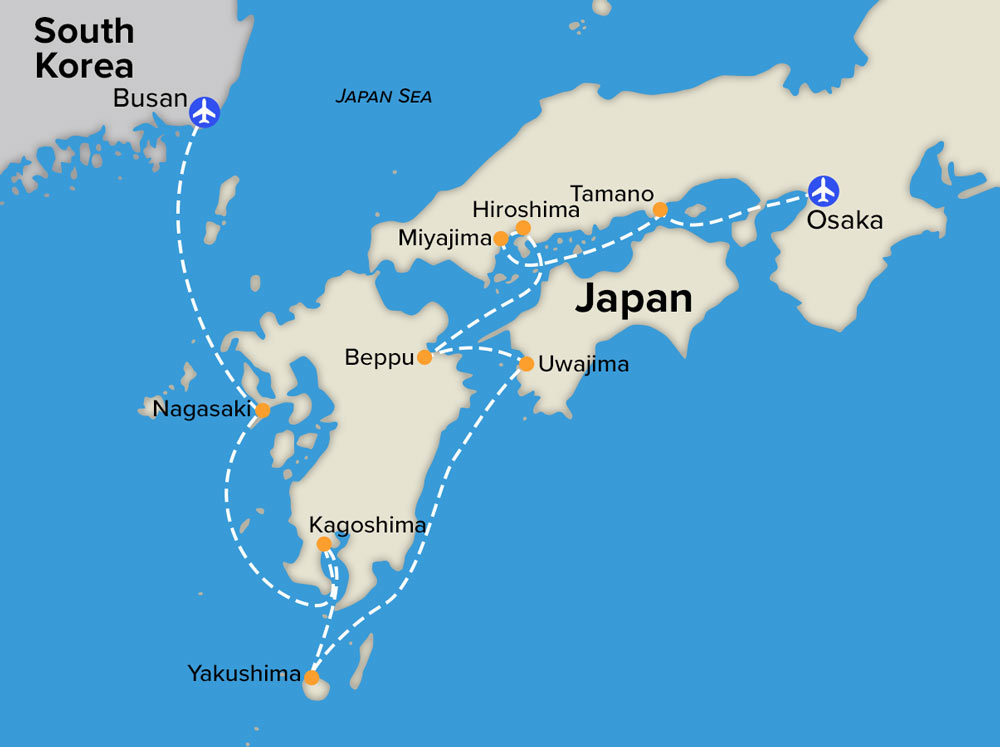
Sailing from Osaka to Busan, you will encounter the best of Japan in all its fascinating variety. Ancient Buddhist and Shinto shrines compete for your attention with the stunning modernity of the cities you visit. The natural environment ranges from the geothermal pyrotechnics of Beppu's hot springs and the extraordinary biodiversity of the cedar forests on Yakushima Island to the serenity of the exquisitely designed and maintained gardens of Koraku-en and Sengan-en. Demonstrations of traditional crafts like bamboo weaving and calligraphy and a rich sampling of Japanese cuisine during meals ashore to give a sense of everyday life. And twice during the voyage—in Hiroshima and Nagasaki—you will have occasion to reflect on the devastation of nuclear war.
Throughout the journey, you will be accompanied by Professor Justin M. Jacobs, your Great Courses expert and an historian of East Asia. Dr. Jacobs will share insights into Japanese culture and history on excursions and in presentations both formal and informal, with special emphasis on the importance of the UNESCO World Heritage sites on the itinerary.
with Justin Jacobs

Secrets of Japan: Sacred Lands and World Heritage
DEPARTURE DATE AND PRICING

Highlights
Stand in the ruins of Olympia, the birthplace of the Olympic Games, and imagine the excitement of ancient athletes competing in honor of Zeus, king of the gods.
Discover the stunning mosaics of Hosios Loukas, a hidden Byzantine monastery, where centuries of devotion are etched in golden tiles, revealing Greece’s transition from antiquity to medieval splendor.
Immerse yourself in the myth and majesty of the Acropolis and explore the Parthenon and its surrounding temples with Professor Cyrino, uncovering the divine power of Athena and the artistic mastery that shaped classical Greece.
Travel in the footsteps of Agamemnon as you walk through the Lion Gate of Mycenae and visit the Tomb of Agamemnon, learning how Homer’s epics immortalized the kings and warriors of this ancient civilization.
Explore the sacred center of Delphi as you ascend the slopes of Mount Parnassus to the Temple of Apollo, where the Oracle once delivered cryptic prophecies that shaped the course of Greek and Mediterranean history.
Highlights
Stand in the ruins of Olympia, the birthplace of the Olympic Games, and imagine the excitement of ancient athletes competing in honor of Zeus, king of the gods.
Discover the stunning mosaics of Hosios Loukas, a hidden Byzantine monastery, where centuries of devotion are etched in golden tiles, revealing Greece’s transition from antiquity to medieval splendor.
Immerse yourself in the myth and majesty of the Acropolis and explore the Parthenon and its surrounding temples with Professor Cyrino, uncovering the divine power of Athena and the artistic mastery that shaped classical Greece.
Travel in the footsteps of Agamemnon as you walk through the Lion Gate of Mycenae and visit the Tomb of Agamemnon, learning how Homer’s epics immortalized the kings and warriors of this ancient civilization.
Explore the sacred center of Delphi as you ascend the slopes of Mount Parnassus to the Temple of Apollo, where the Oracle once delivered cryptic prophecies that shaped the course of Greek and Mediterranean history.
Highlights
See 1,000-year-old Yakusugi cedar trees in the forests of Yakushima Island and learn about this UNESCO-designated site of extraordinary eco-diversity.
Take time for reflection at the Peace Memorials in both Hiroshima and Nagasaki.
Sample regional cuisines in meals ashore in Osaka, Okayama, and Kagoshima.
Visit five distinct and fascinating UNESCO World Heritage Sites in the company of your professor, an expert in both Japan and UNESCO World Heritage sites.
Explore Koraku-en Garden in Okayama, recognized as one of Japan's three finest landscape gardens
Practice Zen mediation at the Daisho-in Temple on Miyajima before visiting Itsukushima Shrine and its famous torii gate.

See 1,000-year-old Yakusugi cedar trees in the forests of Yakushima Island and learn about this UNESCO-designated site of extraordinary eco-diversity.
Take time for reflection at the Peace Memorials in both Hiroshima and Nagasaki.
Sample regional cuisines in meals ashore in Osaka, Okayama, and Kagoshima.
Visit five distinct and fascinating UNESCO World Heritage Sites in the company of your professor, an expert in both Japan and UNESCO World Heritage sites.
Explore Koraku-en Garden in Okayama, recognized as one of Japan's three finest landscape gardens
Practice Zen mediation at the Daisho-in Temple on Miyajima before visiting Itsukushima Shrine and its famous torii gate.
Highlights
Dr. Justin M. Jacobs is a Professor of History at American University. He earned a PhD in history from the University of California, San Diego. At American University, Professor Jacobs teaches courses on Japanese and Chinese history, the Silk Road, and voyages of exploration. He is the author of The Compensation of Plunder: How China Lost Its Treasures; Xinjiang and the Modern Chinese State; and Plunder? How Museums Got Their Treasures. He has also written for major newspapers such as The Washington Post. Professor Jacobs has created two Great Courses: World Heritage Sites: Exploring the World's Greatest Places and World Heritage Sites II: 12 More of the World's Greatest Places.
Justin Jacobs
Journey Expert
Justin Jacobs



Studio PONANT-Thibault Garnier
Osaka
Arrive at Kansai International Airport (KIX), Osaka, Japan, where you will be met and transferred to the Imperial Hotel Osaka (or similar) for overnight. Since most flights arrive late in the day, there are no group activities scheduled for this evening. Check in, have a bite to eat, and get a good night's sleep.
Included Meal: Reception
Accommodations: Imperial Hotel Osaka (or similar)

Shitennoji Temple
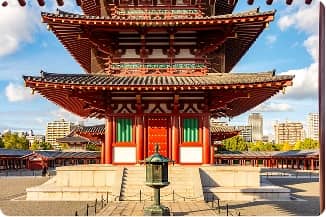
Today begins with a welcome breakfast at which you will meet your fellow travelers and your Great Courses expert before exploring some of Osaka's most important landmarks with your local guide. Begin at the magnificent Osaka Castle, the 16th-century stronghold of the warlord who came closest to unifying Japan before the Tokugawa shogunate.
A walk through Dotonbori—Osaka's neon-lit entertainment district and culinary hub—includes lunch at a trendy restaurant, before a visit to Shitennoji Temple. Founded in 593 CE by Prince Shotoku, a great patron of Buddhism, Shitennoji marks the official state embrace of Buddhism and the beginning of its deep influence on Japanese culture. In late afternoon, transfer to the port to embark Le Soleal.
Included Meals: Breakfast, Lunch on Tour, Dinner
Accommodations: Le Soleal

Koraku-en Garden
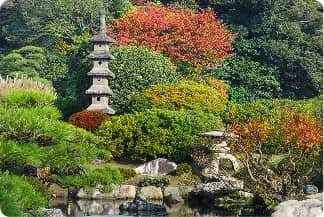
Your day begins by discovering the aesthetic and spiritual culture of Japan with visits to three of Okayama Prefecture's most important landmarks, beginning with the Koraku-en Garden, built in the late 17th century by the ruling Ikeda clan of Okayama. Recognized as of one of the three best landscape gardens in Japan, it is designed with wide lawns, tranquil ponds, and carefully placed teahouses that are best enjoyed while strolling.
After lunch at a traditional Japanese restaurant, visit Kurashiki Bikan Historical Quarter, an Edo-period merchant district of white-walled warehouses (kura), lattice-fronted townhouses, and stone bridges. Close your day at the Shinto Yuga Shrine, where you witness a purification ritual followed by a ceremonial kagura dance performed by worshippers in ornate costumes and masks praying for harmony and good fortune.
Included Meals: Breakfast, Lunch on Tour, Dinner
Accommodations: Le Soleal
'floating' torii gate
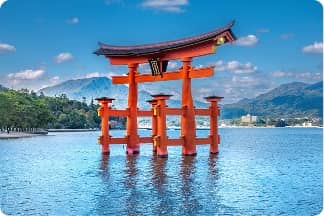
Early this morning, arrive at Miyajima Island, where you will start at the Daisho-in Temple for a session of traditional Zen meditation. Afterward, visit the nearby Itsukushima Shrine, a holy place of Shintoism since its inception, famous for its 'floating' torii gate. The shrine's design, incorporating the surrounding forest and the sea, is recognized as the standard of beauty against which other shrines are compared.
During lunch aboard, Le Soleal sails to Hiroshima for a reflective visit to the Hiroshima Peace Memorial Park and Museum, where exhibits tell the story of the profound and history-altering events of August 6, 1945. Some of the displays can be unnerving, but they serve to remind you of the awesome destructive power of modern warfare.
Included Meals: Breakfast, Lunch, Dinner
Accommodations: Le Soleal
Chinoike Jigoku
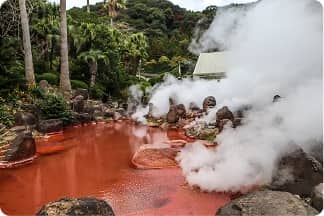
Beppu is one of the most famous geothermal destinations in the world, a place where the nearly 3,000 hot spring sources scattered throughout the city are used for hot baths, steam vents, sand and mud baths, and even for cooking. There are also springs far too hot for human use, known collectively as the 'Hells of Beppu.' This morning, visit two of these 'hells'—Chinoike Jigoku, where the pool of reddish iron-rich mud looks like boiling blood; and Umi Jigoku, whose gurgling waters are a deep cobalt blue.
Following these geothermal displays, travel to Beppu City Traditional Bamboo Crafts Center, where the techniques of weaving bamboo employed are much the same as they were 700 years ago. You will see master craftsmen at work and browse exhibits that showcase the growth of the craft from weaving simple objects like baskets and trays to creating designer furniture and large-scale sculptures.
Included Meals: Breakfast, Lunch, Dinner
Accommodations: Le Soleal
Nanraku-en Garden
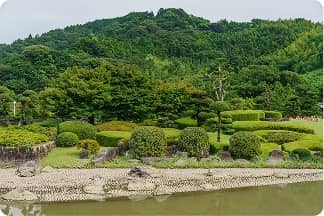
Your exploration of Uwajima begins at Nanraku-en Garden, a strolling garden in the same tradition as Okayama's Koraku-en, where the highlight is a demonstration of the traditional art of Japanese calligraphy and an opportunity to try your hand at creating some simple characters.
At Taga Shrine, an ancient Shinto shrine where people would come to pray for health, longevity, and fertility, you will have the opportunity to visit the Dekoboko Shindo, a museum dedicated to expressions of human sexuality, including both fertility symbols and erotica from around the world. A short walk from the museum brings you to the Warei Shrine, known for its large stone torii gate and pleasant gardens.
Included Meals: Breakfast, Lunch, Dinner
Accommodations: Le Soleal
Yakushima
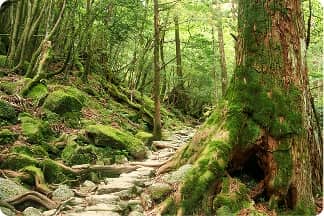
The small circular island of Yakushima (about 17 miles across) contains a truly amazing variety of ecosystems—ranging from subtropical coastal areas to nearly alpine forests on the peaks of mountains that rise to 6,500 feet. Designated a UNESCO World Heritage Site in 1993, the island's unique biodiversity is described in detail at the Yakushima World Heritage Conservation Center and at the Yakusugi Museum, both of which you will visit. The museum is largely devoted to the famous Yakusugi cedar trees, a number of which are over 1,000 years old—and one, Jomon Sugi, at least 2,000.
Included Meals: Breakfast, Lunch, Dinner
Accommodations: Le Soleal
Sengan-en Garden
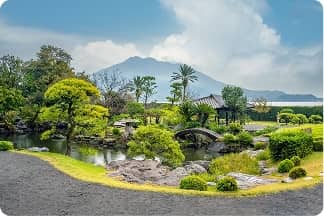
Your full-day excursion in Kagoshima is divided between a morning visit to Mount Sakurajima, one of the world's most active volcanos, and an afternoon stroll through Sengan-en Garden, a UNESCO World Heritage Site.
On Mt. Sakurajima, which rivals Etna for frequency of activity, visit the Arimura Lava Observatory, built on top of a lava flow created by a major eruption in 1946. Follow a trail through the lava, stopping along the way for sweeping views of the city across Kagoshima Bay. Returning to the mainland, pause for lunch at a traditional Japanese restaurant, and then visit Sengan-en Garden, built in 1658 next to the residence of the Shimazu family, whose later generations were instrumental in the industrialization of Japan during the Meiji era.
Included Meals: Breakfast, Lunch ashore, Dinner
Accommodations: Le Soleal
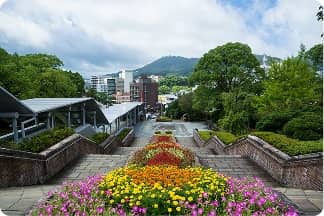
Nagasaki Peace Memorial Park
Your last day in Japan starts with a visit to Nagasaki's Atomic Bomb Museum, which chronicle's the city's devastation from 'Fat Man,' the second of the two nuclear bombs dropped on Japan in August 1945, and to Ground Zero and the Nagasaki Peace Memorial Park, where a collection of sculptures from around the world both commemorate the horrors of the bomb and look forward to a world where such weapons are never used again.
At nearby Dejima, visit the open-air museum that tells the story of the tightly knit community of Dutch traders who were the only contact between Japan and the Western world during the Tokugawa period of official isolation. End your tour at Glover Mansion and Garden, home to a community of Westerners living in Nagasaki in the 19th and 20th centuries. Glover's garden is said to be the inspiration for the setting of the opera Madame Butterfly.
Included Meals: Breakfast, Lunch, Dinner
Accommodations: Le Soleal
Day 11 – Copenhagen | Disembark

Luxury learning travel experiences of a lifetime.


Studio PONANT
Studio PONANT
Studio PONANT
Studio PONANT
Studio PONANT
Studio PONANT
Studio PONANT
Studio PONANT
Cabin and Deck Pricing
Studio PONANT
PONANT-Juin2018
Studio PONANT
Studio PONANT
Studio PONANT
Download a ship guide
Download a deck plan

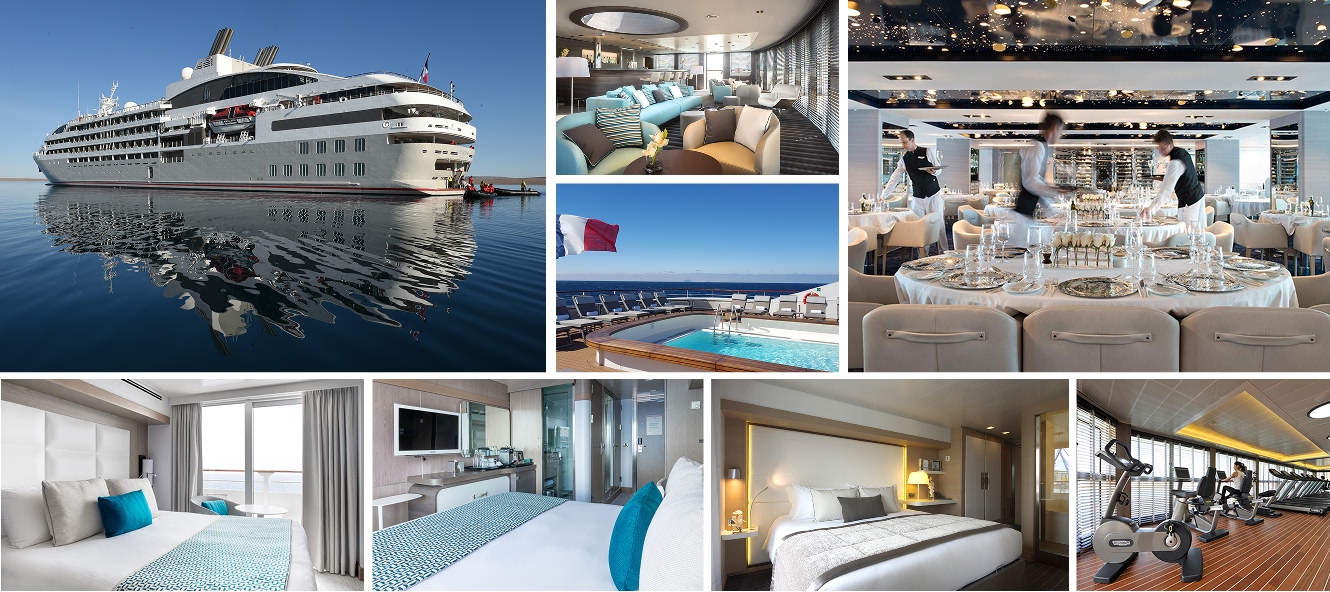
Your Ship: Le Soleal
Le Soleal is part of PONANT’s Sisterships series of luxury small ships, featuring 132 cabins and suites accommodating up to 264 guests with highly personalized service. Designed with French elegance and advanced marine technology, she combines refined comfort with strong environmental stewardship, including Clean Ship certification and systems that reduce emissions and help protect sensitive marine environments. More compact than large ocean liners, Le Soleal’s versatile design and relatively shallow draft allow access to smaller ports and coastal regions, while modern stabilizers ensure a smooth and comfortable voyage. (8 nights)
Imperial Hotel Osaka
Osaka, Japan
Imperial Hotel Osaka is a luxury 5-star hotel known for refined service and elegant comfort. Built in 1996, it blends classic hospitality with modern amenities including spacious rooms, high-end dining across multiple restaurants, and a large fitness and pool club. (1 night)
Sign up to receive the latest trip updates and instant access to a digital version of our beautiful full-color 2026–2027 travel catalog. You will also have the option to share your mailing address and we’ll send a printed copy of our next catalog to your door.
Stay Updated and Receive a FREE Catalog
Enter your name and email and we will keep you up to date on trips that are coming soon. PLUS, you will be able to download a digital version of our beautiful full color 2025-2026 travel catalog.
Get updates on NEW destinations and a FREE catalog right to your inbox.

Copyright 2026 The Teaching Company Sales, LLC. | Destinations | Terms & Conditions | Privacy Policy
January 8–15, 2028
March 2–10, 2027
Questions? Call
1-855-476-5080

Secrets of Japan: Sacred Lands and World Heritage
Sign up to receive the latest trip updates and instant access to a digital version of our full-color 2026–2028 travel catalog. You will also have the option to share your mailing address and we’ll send a printed copy of our next catalog to your door.
Stay Updated and Receive a FREE Catalog
Request your copy of our full color travel catalog
Highlights
Uncover the dynastic ambitions and historical significance of monuments like Hassan Tower and the Mausoleum of Mohammed V in Rabat.
Experience the stony landscape of the Agafay Desert on a camel trek, culminating in a breathtaking sunset over the High Atlas Mountains.
Admire the Islamic architecture in Marrakesh, from the grand Koutoubia Mosque and intricate Bahia Palace to the serene beauty of the Ben Youssef Madrasa.
Discover the University of al-Qarawiyyin, the world’s oldest continuously operating university, and engage in a discussion on its profound influence on global scholarship.
Wander through the labyrinthine alleyways of the UNESCO-listed Medina in Fes, where vibrant stalls overflow with textiles, spices, and artisanal crafts.